 Classical Mechanics
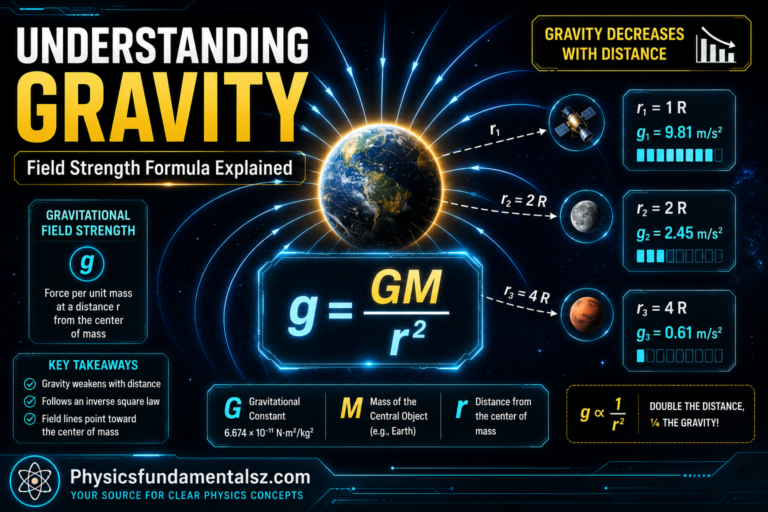
Gravitational Fields: g = GM/r², Field Lines & Orbital Speed
Understanding gravitational fields means understanding why objects fall the way they do, why satellites stay in orbit, and why the…
Fifty-plus in-depth articles across mechanics, thermodynamics, waves, electromagnetism and modern physics — written to build genuine intuition.
Classical Mechanics
Understanding gravitational fields means understanding why objects fall the way they do, why satellites stay in orbit, and why the…
 Classical Mechanics
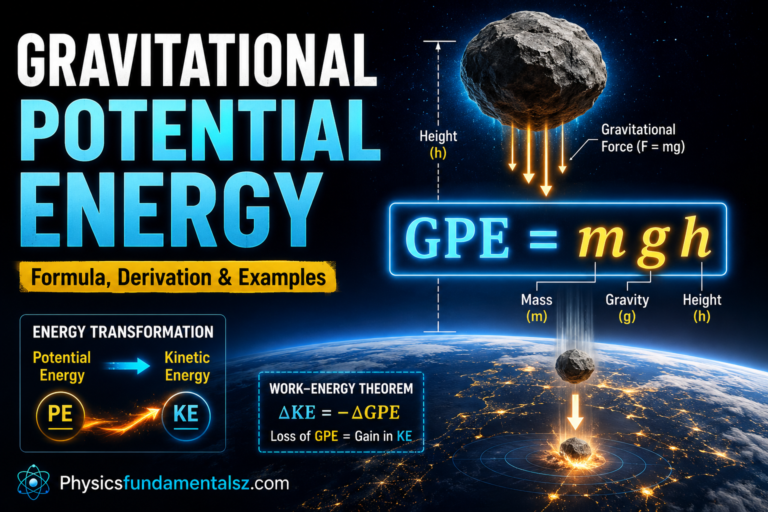
Lift a book off a table, stretch a spring, or carry water up to a rooftop tank, and in each…
 Classical Mechanics
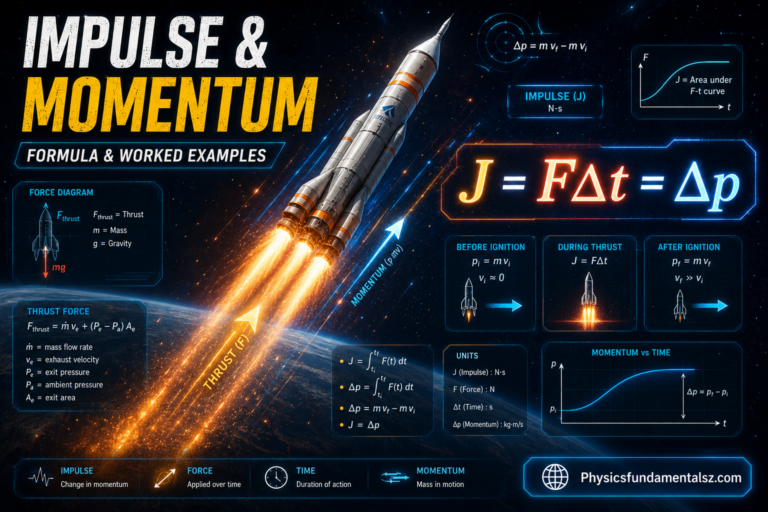
Impulse & momentum are two of the most important concepts in classical mechanics, and they explain everything from why airbags…
 Classical Mechanics
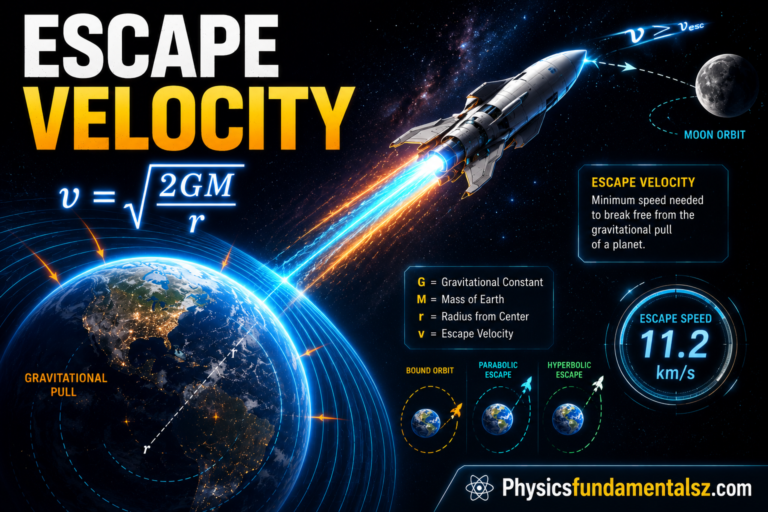
Escape velocity is one of the most fascinating ideas in classical mechanics and astrophysics. It explains why a rocket needs…
 Classical Mechanics
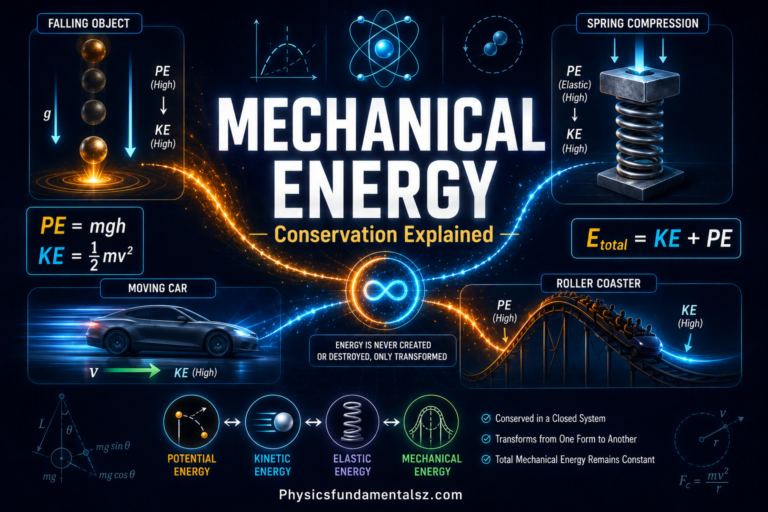
Mechanical energy is one of the first ideas that ties motion and position together into a single, usable number. Every…
 Classical Mechanics
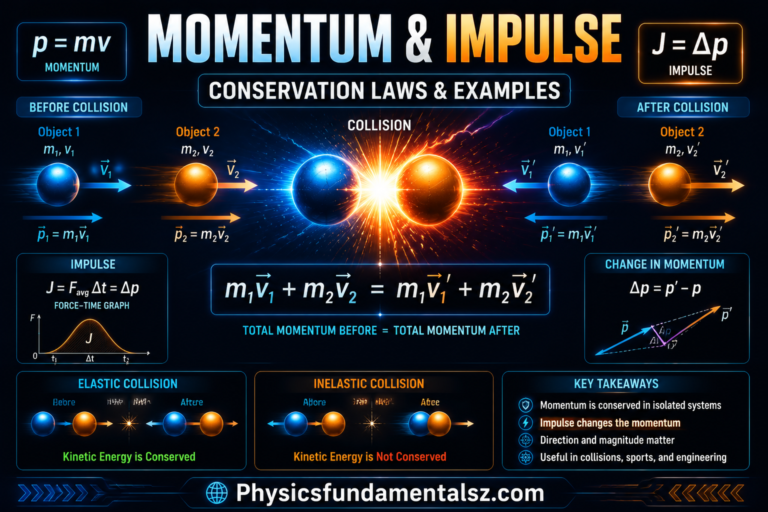
Momentum and impulse collisions form one of the most important topics in classical mechanics. Every time two objects crash into…
 Classical Mechanics
Potential energy is one of the first ideas every physics student meets, and it stays useful all the way from…
 Classical Mechanics
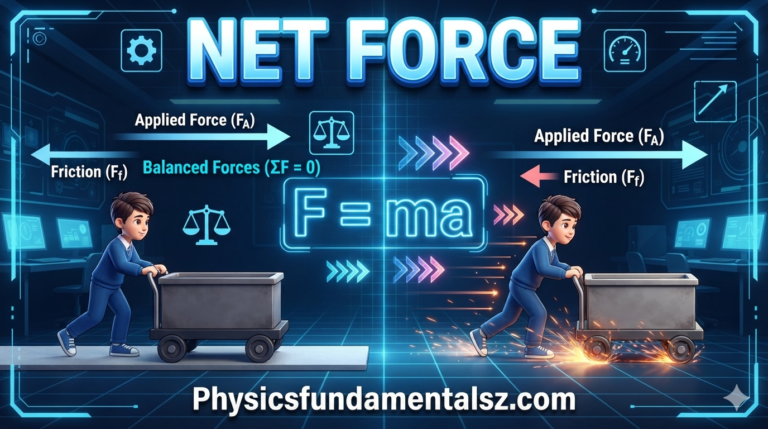
Net force is one of the most important concepts in classical mechanics. Every object you see moving, stopping, or staying…
 Classical Mechanics
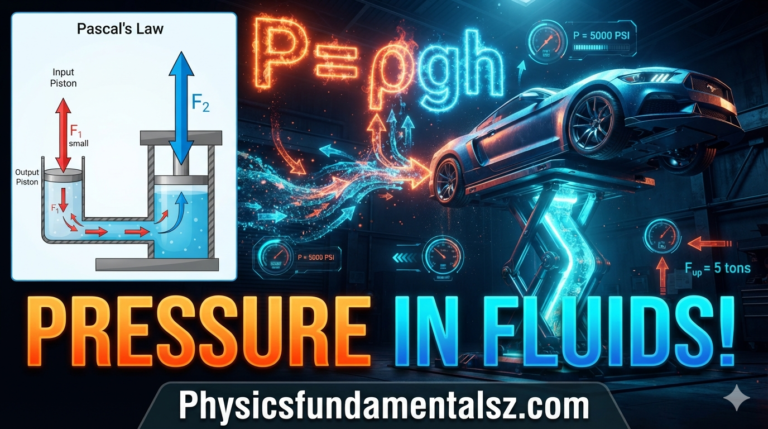
Pressure in fluids is one of the most practical ideas in all of physics. It explains why a dam is…
 Kinematics
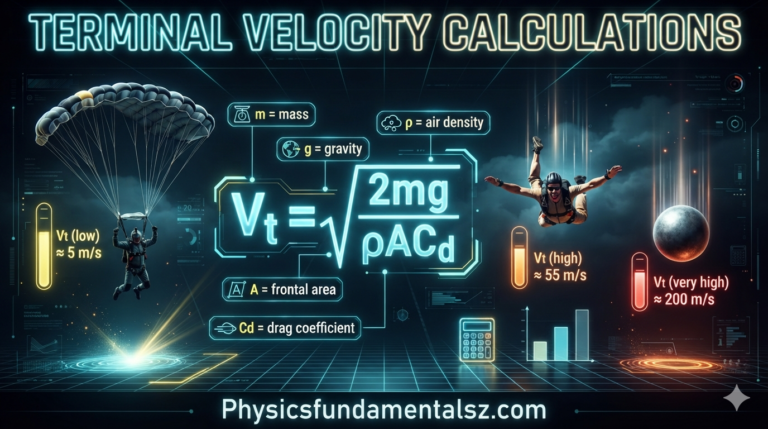
Terminal velocity is the constant speed an object reaches when the pulling force of gravity is fully balanced by the…